
Can You Top Up a Crypto Card With a Bank Transfer?

Quick answer: Yes — Rivocard supports bank transfer top-ups in addition to cryptocurrency deposits. The same 5% fee applies to bank transfers as to crypto deposits (deducted when you fund a card from your wallet balance). The key difference is speed: crypto deposits via TRC-20 USDT arrive in seconds, while bank transfers typically take 1-3 […]
How Long Does a Crypto Card Top-Up Take?

Quick answer: A crypto card top-up on Rivocard takes between seconds and 60+ minutes, depending entirely on which cryptocurrency and network you use. USDT on TRC-20 (Tron) and USDC on Solana typically confirm in seconds to under a minute — the fastest options available. Bitcoin is the slowest, taking 20-60 minutes under normal conditions and […]
Minimum Deposit for a Crypto Card: What You Need to Know
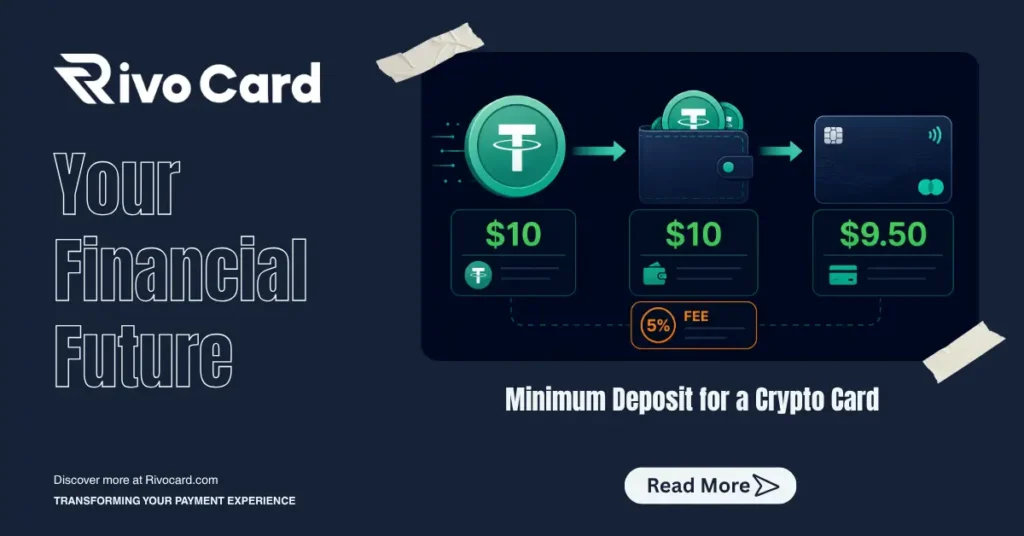
Quick answer: The minimum deposit to your Rivocard wallet is $10 USD equivalent in any supported cryptocurrency. However, the practical starting amount for most users is $20-$50 — because after the 5% card funding fee, a $10 deposit that goes entirely to a card leaves only $9.50 to spend. For USDT on Tron (TRC-20), network […]
How to Top Up a Crypto Card With USDT
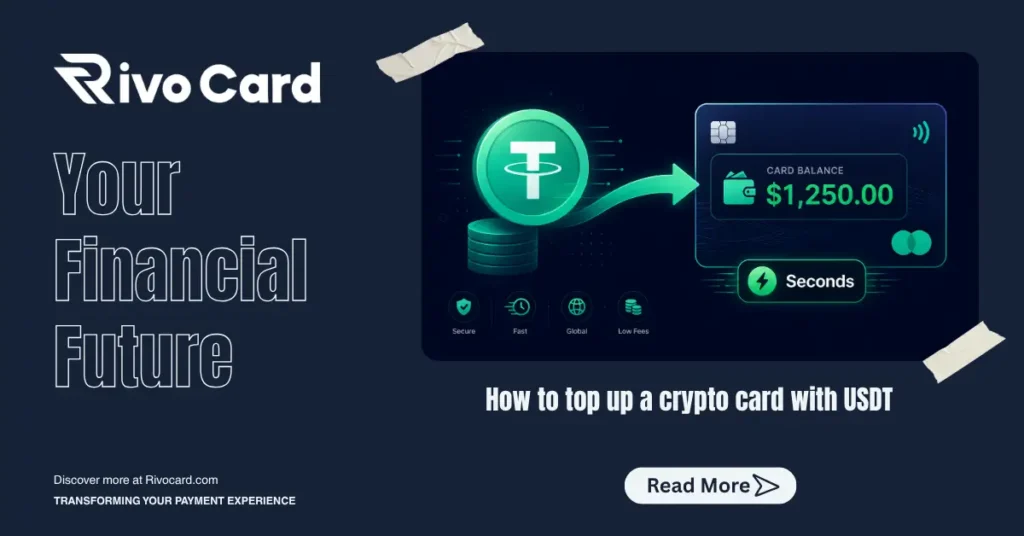
Quick answer: To top up a crypto card with USDT, log into your Rivocard account, select USDT and your preferred network (TRC-20 recommended), copy the deposit address, and send USDT from your wallet or exchange. On Rivocard, USDT deposits to your wallet are free — no fee at this step. Once the network confirms (seconds […]
How to Reload a Crypto Card
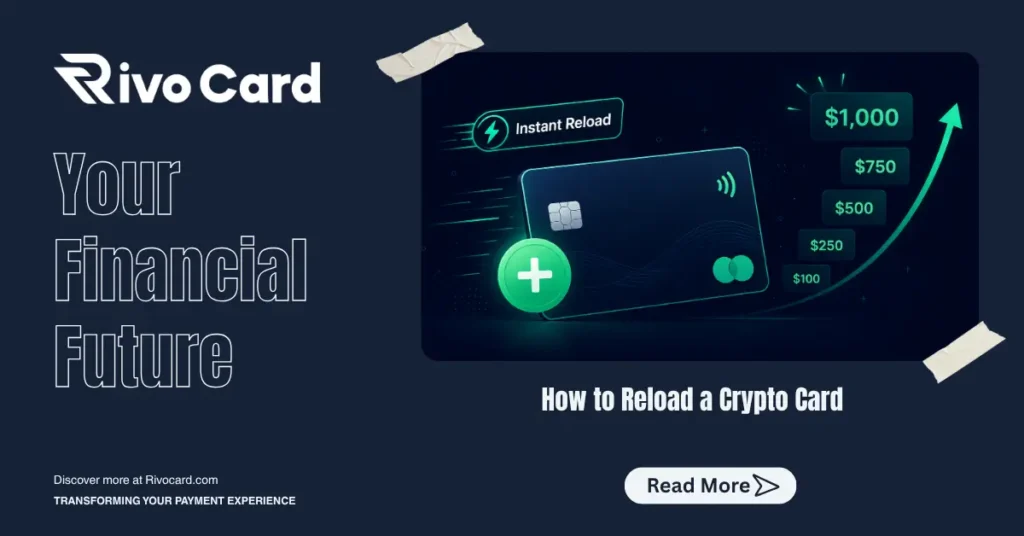
Quick answer: To reload a crypto card on Rivocard, log into your dashboard, select the card you want to add funds to, choose how much to reload from your wallet balance, and confirm. The 5% Rivocard fee is deducted from the reload amount — reload $100, the card receives $95. If your wallet balance is […]
How to Top Up a Crypto Card With Bitcoin

Quick answer: To top up a crypto card with Bitcoin, log into your card account, navigate to the deposit section, select Bitcoin (BTC) as the deposit asset, copy the BTC deposit address shown, and send Bitcoin from your wallet or exchange to that address. On Rivocard, depositing Bitcoin to your wallet is free — no […]
Virtual Card vs Physical Crypto Card: Which Is Right for You?
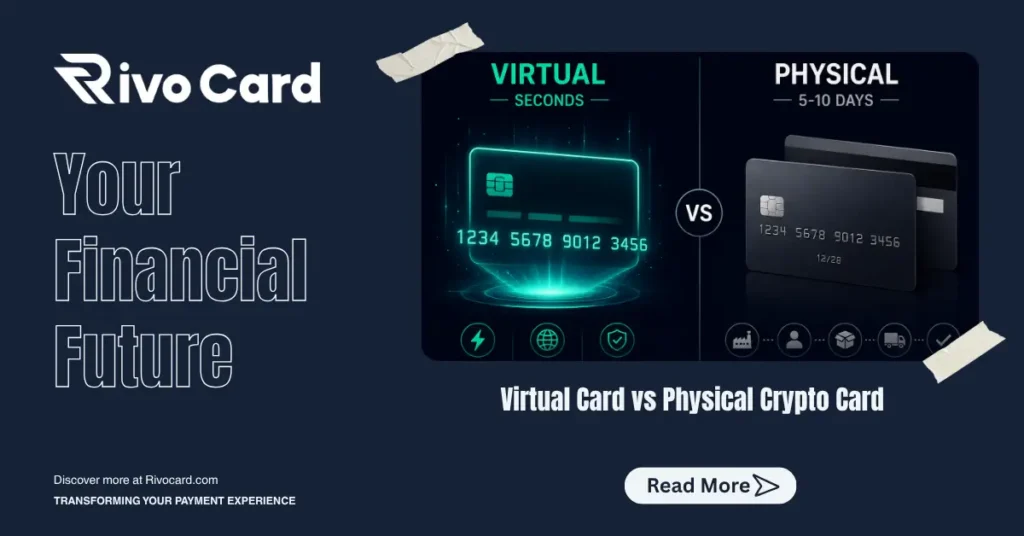
Quick answer: A virtual crypto card is a digital card number issued in seconds — ideal for online purchases, subscriptions, digital advertising, and Apple Pay or Google Pay contactless payments. A physical crypto card is a real plastic card that ships by mail — necessary for ATM cash withdrawals, chip-and-PIN terminals, and merchants that require […]
Crypto Card Instant Issuance Explained
Quick answer: Crypto card instant issuance means a virtual card — with a real card number, expiry date, and CVV — is generated and ready to use within seconds of account creation, with no physical manufacturing, no mail delivery, and no activation wait. On Rivocard, instant issuance works because virtual card numbers are generated programmatically […]
Step-by-Step Guide to Crypto Prepaid Cards
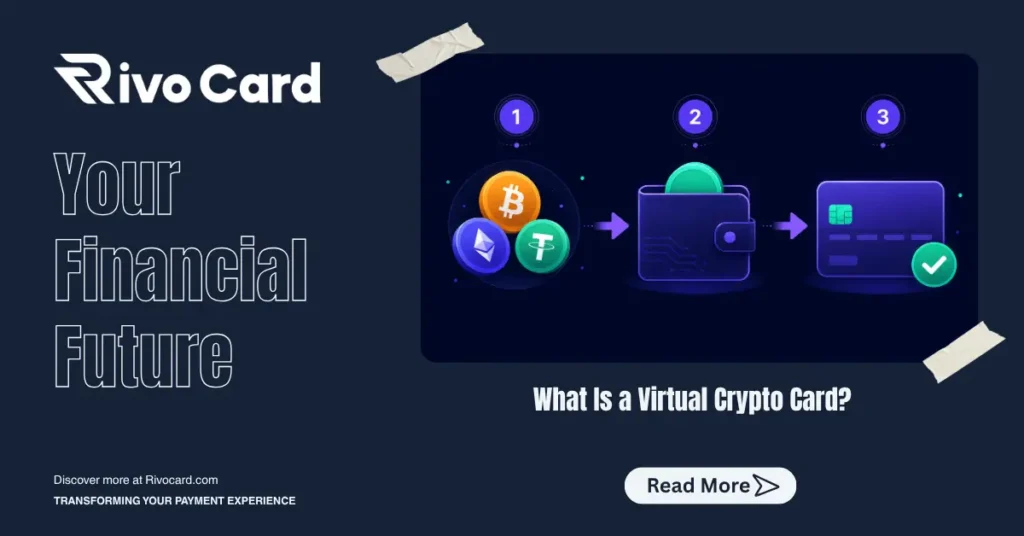
Quick answer: To use a crypto prepaid card, you sign up for an account, deposit cryptocurrency to your platform wallet (free), create a virtual card (free), fund it from your wallet (5% fee deducted from the funded amount), and spend anywhere Visa or Mastercard is accepted — with 0% purchase fees. On Rivocard, the entire […]
What Is a Virtual Crypto Card?
Quick answer: A virtual crypto card is a digital payment card — with a real card number, expiry date, and CVV — funded by cryptocurrency instead of a bank account. There is no physical plastic. You deposit crypto, the platform converts it to a spendable dollar balance, and you use the card number to pay […]